
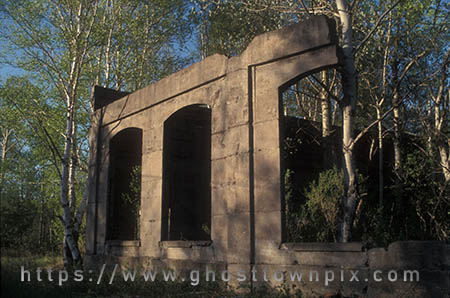
Depot Harbour is one of the most fascinating places in the Parry Sound area — a genuine ghost town on Parry Island, part of the Wasauksing First Nation, just a short trip from town. In its heyday it was among the most important ports on the Great Lakes; today its empty foundations and standing roundhouse tell the story of a town that rose and fell with the railway.
It began in 1892, when lumber baron John Rudolphus Booth needed a western terminus for his Ottawa, Arnprior & Parry Sound Railway. Rebuffed by Parry Sound landowners over price, he built instead on Parry Island, on what was called the best natural harbour on the Great Lakes. Booth raised a full company town: 110 houses, two towering grain elevators, a hotel, a bank, stores, three churches and a great railway roundhouse. By 1926 some 1,600 people lived here year round, swelling to 3,000 in summer, with trains arriving and departing every twenty minutes carrying grain on the shortest route to the Atlantic.
The end came in stages. Booth sold his railway in 1904; the Canadian National Railway later closed the roundhouse, and the 1933 abandonment of part of the line through Algonquin Park — combined with Depression-era grain prices — sealed the town’s fate. During the Second World War, explosives from the Nobel plant were stored in the old freight sheds, and in the summer of 1945 a fire during the dismantling of the grain elevators spread to the sheds and destroyed what remained.
Today Depot Harbour is considered one of Ontario’s largest and most extensive ghost towns. The roundhouse still stands, foundations hide among the trees, and cement steps by the shore mark where the Catholic church once rose. Visit respectfully — this is First Nation territory, and its history belongs to the community that calls Parry Island home.